Our history
LEO Pharma has a long and deep history dating back to 1908. The following provides a summary of certain key historical milestones of the company.

Early history
1908
Pharmacists August Kongsted and Anton Antons acquire the Lion pharmacy (Løveapoteket) in Copenhagen and establish small-scale pharmaceutical production of standardised medicines.
1909-1938
Following early innovative and commercial successes, LEO Pharma pioneers insulin production in Denmark before transferring the activity to the Nordisk Insulin Foundation and turning to hormone therapeutics.
1939-1945
During World War II, LEO Pharma becomes the first company outside the United Kingdom and the United States to produce penicillin. The company launches Heparin®.
1946-1963
The LEO Pharma moves production to Ballerup, establishing the industrial base that still anchors the company.
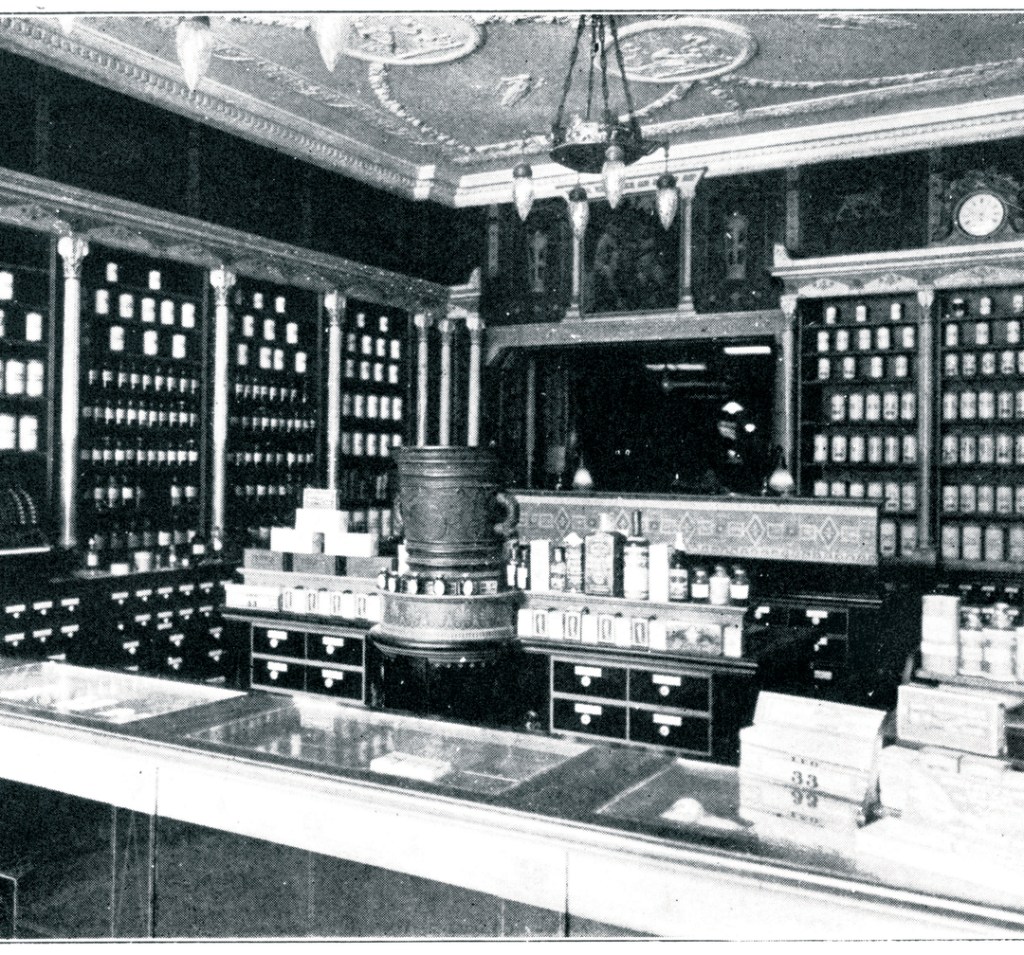
In 1929, LEO Pharma changed its drug development focus to hormone products
Entering dermatology
1964
LEO Pharma enters the field of medical dermatology with the launch of the Fucidin® topical formulation.
1984
The LEO Foundation is established by Knud Abildgaard.

The iconic lion logo photographed in our headquarters in Ballerup, Denmark
Taking the lead in topical dermatology
1991
Launch of Daivonex®/Dovonex®, a novel vitamin D analogue for psoriasis treatment, marking dermatology, especially topicals, as a core strategic focus.
1991
Launch of innohep®, a low-molecular-weight heparin strengthening the Group’s position.
Enhancing the dermatology portfolio and reinforcing scientific capabilities
1998-2006
Divestment of the Medico division, Løven Petfood, the Agro division, Panther Plast, and Animal Health activities, with the livestock business sold last, establishing LEO Pharma as a fully pharmaceutical company with two strategic focus areas: Dermatology and Critical Care.
2001
Launch of Daivobet®, ®, portfolio combining calcipotriol with betamethasone, strengthening leadership in topical psoriasis treatment.

A brainstorming session at the LEO Pharma headquarters in Copenhagen, Denmark
Maintaining a global presence in medical dermatology and entry into biologics
2009
LEO Pharma invests approximately DKK 5 billion to reacquire US commercial rights for its out-partnered psoriasis products and establishes subsidiaries in major markets, including China, Australia, Brazil, the United States, Russia, Japan, and South Korea.
2014
License agreement with Shionogi (formerly Japan Tobacco) for delgocitinib (later Anzupgo®).
2015
LEO Pharma acquires a dermatology portfolio from Astellas, including Protopic®, expanding LEO Pharma’s global dermatology footprint.
Strategic shift to biologics
2016
LEO Pharma decides to enter biologics by acquiring brodalumab (psoriasis) and tralokinumab (AD) from AstraZeneca. Brodalumab launched in 2017 as Kyntheum®, LEO Pharma’s first biologic in dermatology; tralokinumab later launched as Adtralza®/Adbry® in 2021/2022.
2018
LEO Pharma acquires Bayer’s dermatology portfolio, reinforcing the company’s established brands.

Transformation and the
road to IPO readiness
2021
Nordic Capital acquires a minority stake, and a new operational Chair of the Board is appointed.
2021-2022
EU approval of Adtralza® (tralokinumab) and US approval and launch of Adbry®.
2022
New CEO and CFO are appointed. Strategic transformation initiated focusing on growth, innovation, and profitability.
2023
External innovation team established enabling increased focus on external sourcing of innovation and the partner-and-develop innovation model.
2021-2024
Significant expansion of the US affiliate alongside streamlined commercial infrastructure with new commercial partnership model introduced.
2024
EU approval of Anzupgo® (delgocitinib) for CHE, marking the addition of a first topical treatment for the condition and reinforcing LEO Pharma’s medical dermatology profile.

Our headquarters in Ballerup, Denmark
Expanding into rare
dermatology
January 2025
LEO Pharma enters a strategic partnership with Gilead Sciences to accelerate the development and commercialisation of the small molecule oral STAT-6, reinforcing the company’s scientific capabilities and partner-and-develop innovation model.
June 2025
Partnership with Boehringer Ingelheim adds Spevigo®, a biologic for rare skin diseases, to the portfolio.
July 2025
FDA approval of Anzupgo® as the first and only treatment for CHE in the United States.
2025
Spevigo® and Anzupgo® initiated development across multiple additional rare disease indications to unlock their ‘pipeline-in-a-drug’ potential.
2025
Partnership with Junshi Biosciences to commercialise Loqtorzi® for NPC in Europe.